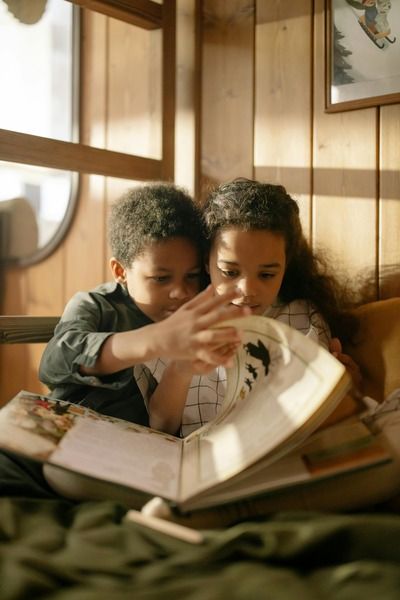
Helping children learn to read is one of the most rewarding parts of early education. Yet for many young learners, traditional drills and worksheets can feel overwhelming or boring. Children learn best when they are active, curious, and emotionally connected to what they’re doing; and that is exactly why a learn-through-play approach is so powerful.
When reading is introduced through joyful, imaginative activities, children naturally develop vocabulary, phonics awareness, comprehension, and confidence. Below are effective, research-informed, and fun methods to teach kids how to read through play.

1. Phonics Treasure Hunts
Children love searching for hidden objects, and this excitement can be redirected towards learning letter sounds.
How it works:
- Hide cards around the room with letters, pictures, or simple words.
- Give learners clues like: “Find something that starts with /b/” or “Bring me the card that says cat.”
- Allow them to move, shout out sounds, and celebrate each discovery.
Why it works:
Treasure hunts build sound–letter recognition, phonemic awareness, and early decoding skills while keeping learners physically engaged.
2. Storytelling With Puppets
Puppets bring stories to life, helping children understand narrative structure and learn new words.
Try this:
- Read a short story or poem.
- Give each child a puppet (store-bought or homemade).
- Let them retell the story using voices, gestures, and imagination.
Learning benefits:
- Strengthens comprehension
- Encourages expressive language
- Helps shy learners participate
- Builds sequencing skills (beginning–middle–end)
3. Sensory Letter Play
Many children need to touch, feel, and move to understand abstract concepts like letters and sounds.
Play-based ideas:
- Write letters in sand, rice, flour, or shaving cream
- Use playdough to form letter shapes
- Create textured letters using fabric, buttons, or beads
Why it works:
Multisensory activities activate stronger memory pathways and make letter formation and recognition more natural.
4. “Build-a-Word” Games With Blocks
Blocks are not only for construction—they’re fantastic literacy tools.
Activities:
- Write letters on blocks.
- Ask learners to “build” simple CVC (consonant–vowel–consonant) words like sun, map, dog.
- Challenge them to swap one block to create a new word (e.g., cat → bat → bag → bug).
Skills developed:
- Blending and segmenting
- Phonics decoding
- Understanding how changing a letter changes a word
5. Reading Hopscotch
Add movement to reading practice to energize the lesson.
Set up:
- Draw hopscotch squares and write letters, blends, or sight words inside.
- Learners hop to the correct square when you call out the sound or word.
Why kids love it:
It combines physical play with literacy, improving memory and reducing frustration.
6. Role-Play “Reading Corners”
Transform a small space into themed reading corners—the doctor’s office, the grocery store, the animal clinic, etc.
How it works:
- Include signs, labels, simple menus, name tags, or instructions.
- Children play in the space while naturally reading environmental print.
Benefits:
- Builds real-world vocabulary
- Encourages spontaneous reading
- Develops social and communication skills
- Makes reading feel meaningful, not forced
7. Interactive Story Apps and Digital Games
While screens should be used mindfully, many educational apps reinforce phonics and early reading through vibrant animations and rewards.
Choose apps that:
- Teach phonics systematically
- Encourage children to read aloud
- Include interactive stories with touchable words
Why it helps:
Gamified learning motivates children and supports personalised learning at their own pace.
8. Singing and Rhyming Games
Rhyme is closely linked to early reading success because it helps children recognise sound patterns.
Activities:
- Nursery rhymes
- “Finish the rhyme” games
- Silly rhyme challenges
- Rhythm clapping to syllables
What children learn:
- Phonological awareness
- Listening skills
- Sound manipulation (a key foundation for decoding)
9. Picture-Based Word Guessing Games
These games encourage prediction, vocabulary building, and comprehension.
Example:
Show a picture and ask questions like:
- “What do you think this character might do next?”
- “What word starts with the same sound as this picture?”
- “Which of these three words matches the picture?”
Why it works:
Children explore language through curiosity rather than pressure.
10. Read-Aloud Sessions With Movement
Instead of sitting still, let learners act out parts of the story.
You can ask them to:
- Pretend to be the characters
- Make the sound effects
- Freeze into statue poses at important story moments
- Make predictions through movement
Learning outcomes:
- Deep comprehension
- Emotional connection to the text
- Improved focus and self-expression
Why Play-Based Reading Works
A playful literacy environment:
- increases motivation and reduces anxiety,
- promotes exploration and creativity,
- supports different learning styles,
- builds stronger long-term understanding,
- allows children to learn naturally and joyfully.
Children do not just learn to read — they learn to love reading.
Conclusion
Teaching children to read through play transforms learning into something magical. By combining movement, imagination, and sensory exploration, parents and educators can create experiences that develop literacy while nurturing confidence and joy. When children laugh, move, explore, sing, and create, they are not just having fun—they are building the foundation for a lifetime of reading success
 Readify Live
Leave a comment