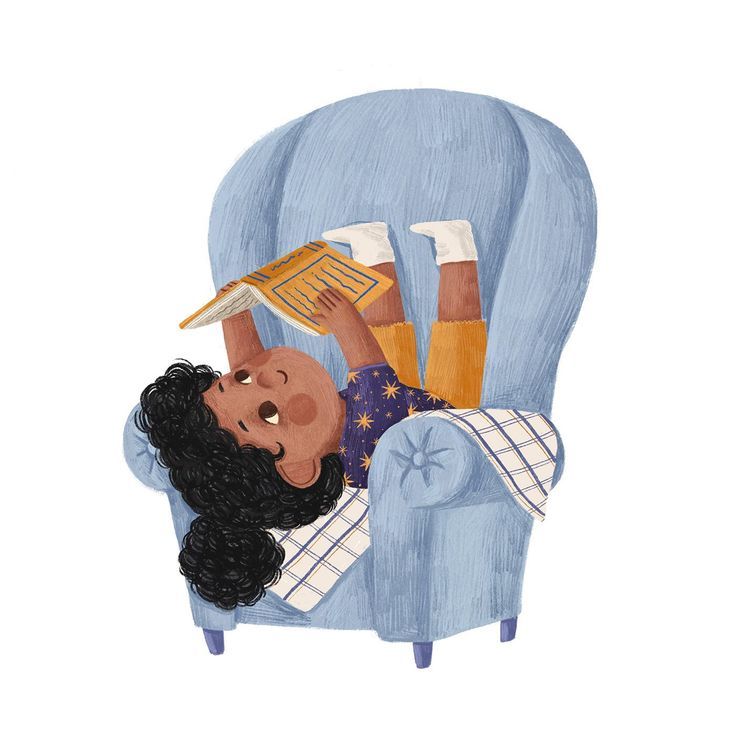

The parents who write to me about older children — the ones in Grade 5, Grade 7, Grade 9 and older — almost always start their message the same way.
“I think we’ve left it too late.”
I want to say this clearly, before anything else: you have not left it too late. I have taught children who could not read in Grade 6 and who were reading independently within months. I have worked with teenagers who carried years of shame into our first lesson and who left with their dignity restored. I have watched a child reach Grade 9 still struggling with words their classmates had mastered in Grade 2, and then move forward in confidence after just one term of proper foundational teaching.
The brain does not stop being able to learn to read at age 7. That is a myth, and it is a cruel one, because it has caused thousands of South African parents to give up on children who could absolutely still be helped.
If your child is older than 8 and still struggles to read, this post is for you. Here is what is actually happening, why traditional schooling has failed your child, and exactly what you can do about it now.
Why Older Children “Fall Through the Cracks”
The South African education system is, broadly, designed around the assumption that children learn to read in Grades 1 to 3, and then spend the rest of their schooling using that skill to learn other content. The problem is what happens to a child who does not master reading in those first three years.
By Grade 4, the curriculum shifts. Suddenly children are expected to read for information — to understand history textbooks, follow maths word problems, interpret science diagrams, and analyse English literature. A child who is still struggling to decode words cannot do any of this. So they fall behind in every single subject simultaneously, and the gap widens with each passing term.
Worse still, by Grade 4 or 5 most teachers no longer teach foundational reading. They assume — reasonably, given how the system is designed — that the basics are in place. So a struggling reader in Grade 5 simply receives no reading instruction at all. They are corrected when they make mistakes, but they are not taught.
This is the cruellest pattern in our education system: the children who need the most help receive the least, simply because they have aged past the year in which we are willing to teach reading.
The Hidden Cost: Shame
Long before parents write to me, their child has usually internalised a story. “I’m just not a reader.” “Reading isn’t my thing.” “I’m slow.” “I’m stupid.”
I have seen children as young as 9 carry this. I have seen teenagers refuse to even try, because the cost of trying and failing again is too high. I have seen learners hide their reading struggles from their friends, from their teachers, sometimes even from their parents, because the shame is so painful.
This is the part of the work that breaks my heart and also gives it meaning. Because here is the truth: the shame is almost always more disabling than the actual reading gap. Once a child believes they cannot read, their brain stops trying. The neural pathways that should be building reading skill are blocked by the emotional walls of self-protection.
This means that helping an older struggling reader is never just a matter of teaching the missing skills. It is also, and sometimes mostly, a matter of rebuilding the child’s relationship with reading itself. The skills can be taught in months. The shame takes patience, dignity, and a teacher who will never, ever make the child feel small again.
What Older Struggling Readers Actually Need
When a younger child struggles to read, the solution is usually about adding skills. When an older child struggles, the solution is usually about finding the gap and filling it specifically. Many older struggling readers can read most words competently. They might decode reasonably well. The problem is usually one of the following four hidden gaps.
Gap 1: Phonological Awareness Was Never Properly Built
Phonological awareness — the ability to hear and play with the sounds inside words — is the foundation of all reading. If a child reached Grade 4 without it being properly taught, every reading skill that came afterwards was built on sand. The good news is that phonological awareness can be taught at any age, and it transforms reading rapidly once it clicks.
How to spot this gap: ask your child to break a word like “butterfly” into its individual sounds (b-u-t-t-e-r-f-l-y). If they cannot do it, this is almost certainly part of the problem.
Gap 2: Sight Words Were Skipped
There are roughly 220 high-frequency words in English (the Dolch and Fry word lists) that should be recognised instantly, without sounding out. The. Was. Said. Because. Through. If these were never properly memorised, your child is sounding out words on every line that they should be reading effortlessly. Reading becomes exhausting, and comprehension suffers because all the brain’s energy is going into decoding.
How to spot this gap: print a sight-word list (free online) and ask your child to read the words out loud as quickly as they can. If they pause, sound out, or stumble on common words, sight words are part of the problem.
Gap 3: Reading Fluency Was Never Built
Fluency is the ability to read smoothly, with appropriate expression and pace. Many older struggling readers can decode words but read in a slow, monotone, word-by-word way. This kills comprehension because by the time they reach the end of a sentence, they have forgotten how it began.
How to spot this gap: listen to your child read a paragraph aloud. If they sound robotic, sound out every third word, or finish without being able to tell you what they just read, fluency is part of the problem.
Gap 4: Comprehension Strategies Were Never Taught
Some older struggling readers can read every word correctly and still understand nothing. This is because comprehension is itself a teachable skill — it involves visualising, predicting, summarising, and questioning the text as you read. If your child has never been explicitly taught these strategies, they may be reading without understanding and not even know it.
How to spot this gap: after your child reads a page, ask them what just happened. If they cannot summarise it in their own words, this is the gap.
What to Do Right Now
If you are reading this and your older child is struggling, here is exactly what I would do, in order.
First, sit with your child and read aloud together for fifteen minutes. Listen carefully. Where do they stumble? Do they sound out small words? Skip words? Lose their place? Read fluently but understand nothing? Your observations are diagnostic gold — they will tell you (or any educator you consult) where the real gap is.
Second, talk to your child about reading without judgement. Ask them what reading feels like for them. Ask if they enjoy it. Ask what they find hardest. Many older struggling readers have never been asked these questions, and the answers will tell you a great deal about what is really going on.
Third, do not ask them to read more. This is the most common parental instinct, and it is almost always counterproductive for older struggling readers. More of the same struggle does not help. What helps is going back, identifying the specific gap, and filling it with proper instruction. A child who is asked to read more without addressing the underlying gap will simply experience more failure, and the shame will deepen.
Fourth, consider getting specialist support. Older struggling readers usually cannot be helped by the same approach that helps younger children. They need a teacher who understands diagnostic teaching, who has the patience to rebuild a fragile reading identity, and who can deliver in small, dignity-preserving groups rather than in front of a class of peers.
How Readify Live Helps Older Struggling Readers
This is the work that founded Readify Live. In 2023, the very first child I taught to read was older than he should have been to still be struggling. I watched the relief on his face when, for the first time in his life, an adult sat with him without judgement and showed him exactly which sounds he had missed and how to learn them.
At Readify Live, our approach to older struggling readers is built on three principles.
Diagnostic first. Every learner begins with a careful assessment of where the actual gap lies. We do not assume. We listen, watch, and identify before we teach.
Small groups or one-on-one. No older child should be made to read aloud in front of strangers. Our classes are 4 to 6 learners maximum, and one-on-one tutoring is available for children who need a fully private space to rebuild confidence.
Multilingual where it helps. If your child is a home-language speaker of IsiZulu or Afrikaans, we can teach in their mother tongue alongside English. As I explained in our previous post on teaching reading in IsiZulu or Afrikaans, mother-tongue reading often unlocks the foundation that English-only instruction never built.
We have worked with children from Grade 4 through to matric. Every one of them has progressed. Many have transformed.
A Final Word
If you are a parent reading this with your heart heavy because your older child cannot read the way they should, please hear me one more time: it is not too late. It is not your fault. And it is not your child’s fault.
The system failed them. But the system is not the only place where reading can be taught. With the right support, with patience, with dignity, your child can absolutely learn to read with confidence. I have seen it happen many times, and I will keep seeing it happen for as long as Readify Live exists.
If you would like to talk about your child, please visit us at https://readifylive.co.za/. We would love to meet your family.
It is never too late to start again.
Muskan Umata is the founder of Readify Live, a multilingual online academy supporting South African learners in reading, languages, mathematics, sciences, and humanities. She holds a B.Ed from the University of the Witwatersrand and has personally taught over 100 learners since 2023.
 Readify Live
Leave a comment